Why cancer AI needs the whole timeline.
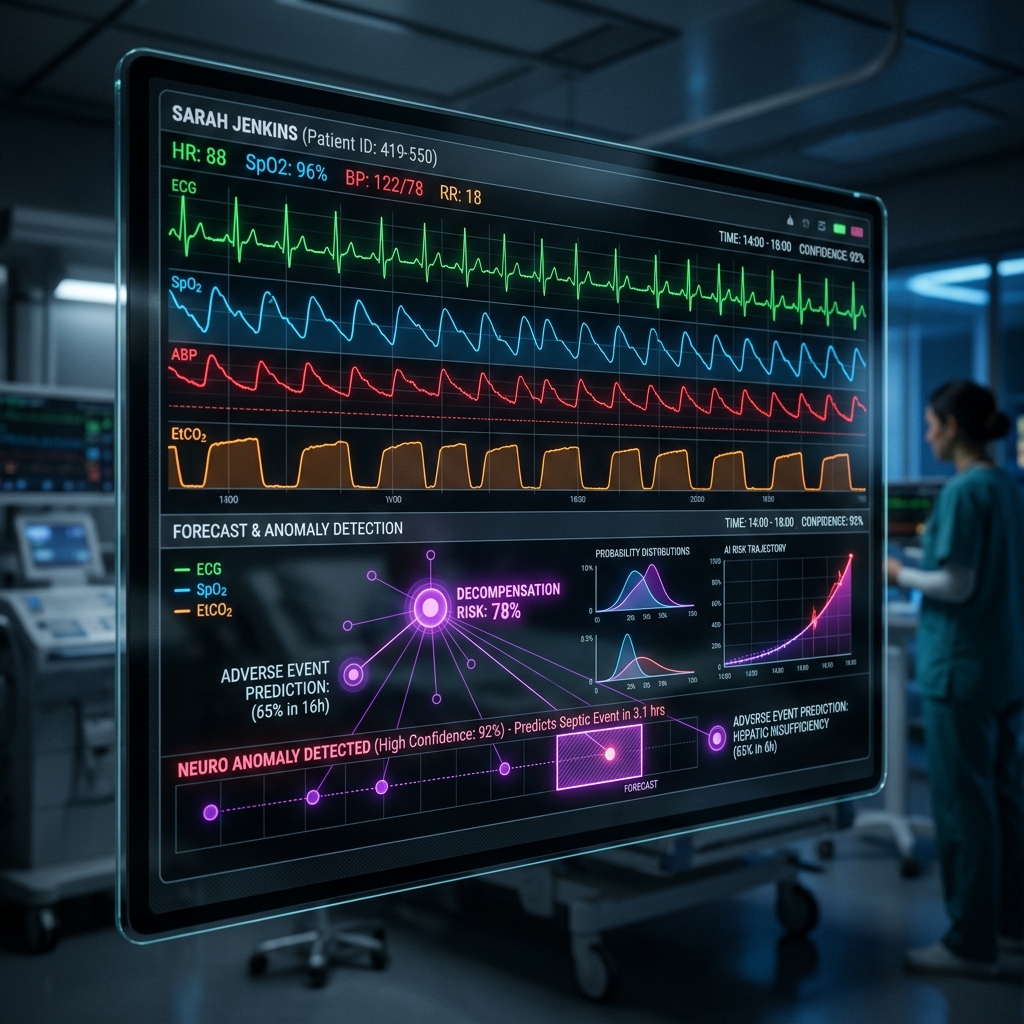
Oncology decisions depend on years of labs, imaging, pathology and therapy response. The thinking behind Lumen's longitudinal design.
A cancer case is a story, not a snapshot
A patient's path runs through screening, diagnosis, staging, several lines of therapy, response assessments and surveillance, often across several institutions and years. Most of the signal sits in how things change over that time, and most systems store it as disconnected documents.
Assemble the timeline first
Lumen starts by building one longitudinal record in Fabric: lab series, imaging and pathology reports, therapy lines and outcomes, normalized and linked. Relay brings in the legacy and scanned sources. Without this step, any model is reasoning about fragments.
Detection as decision support
On top of the timeline, detection models look for early signals in blood markers and imaging for clinician review. Each flag shows the inputs and evidence behind it. The decision stays with the oncologist, and every model follows the evidence ladder before it reaches a care pathway.
Built for cancer, not locked to it
The same longitudinal foundation applies to cardiology, nephrology and other specialties. The oncology models are modules on the platform, not a separate system.
Key takeaways
- 1Build the longitudinal record before building the model.
- 2Show the evidence behind every flag; keep the decision with the clinician.
- 3Design the foundation to serve specialties beyond oncology.